What is MR Urography?
MR urography is an advanced diagnostic method that allows a detailed examination of the urinary system, enabling imaging of the kidneys, ureters, and bladder using magnetic resonance technology. This examination makes it possible to evaluate structural abnormalities, strictures, stones, or tumors in the urinary tract in detail. Since it does not involve radiation, it can be safely applied especially in children and young patients. Functional information about kidney performance can also be obtained. Unlike conventional radiological methods, MR urography has the ability to provide both anatomical and functional evaluation. This contributes to the early diagnosis of diseases and the creation of an accurate treatment plan.
When is MR Urography Performed?
MR urography is preferred when obstruction in the urinary tract, congenital structural abnormalities, or detailed examination of kidney function is required. Strictures caused by kidney stones, urinary flow obstructions, and bladder tumors can be clearly revealed by this method. It can also be used to evaluate congenital anomalies in children, suspected reflux, or kidney function. Moreover, it plays an important role in investigating the causes of recurrent urinary tract infections. In cases of suspected cancer, the spread of tumors in the kidneys, ureters, or bladder can be shown clearly. Doctors may also request this examination to understand the structural features of the urinary tract before surgery.
How is MR Urography Performed?
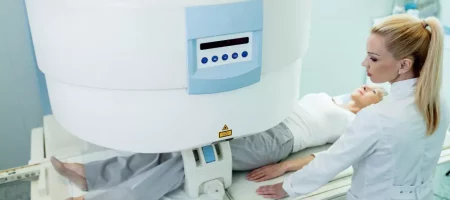
During the scan, the patient lies on their back inside the MR device. The procedure usually takes between 30 and 45 minutes. First, non-contrast images are taken, followed by contrast-enhanced images obtained after intravenous administration of contrast material, allowing for more detailed evaluation of the kidneys and urinary tract. The contrast material is filtered by the kidneys, passes into the urinary tract, and detailed images are obtained during this process. The patient must remain still throughout the scan, as even the slightest movement can blur the images. Mild sedation may be applied for children or individuals unable to stay still for a long period. The procedure is painless, does not involve radiation, and is safe.
Where is MR Urography Performed?
This examination is carried out in well-equipped hospitals and radiology centers where advanced imaging techniques are applied. Since it is not available on every MR device, special software and experienced teams are required. University hospitals, large public hospitals, and advanced private healthcare institutions have the capacity to perform MR urography. The reliability of the results depends heavily on the expertise of radiologists and the quality of the equipment. Therefore, it is recommended that this examination be performed in centers with advanced technological infrastructure.
Why is MR Urography Requested?
Doctors request MR urography when they suspect a structural or functional disorder in the urinary tract. Stones, tumors, strictures, congenital anomalies, or recurrent urinary tract infections are the main reasons for this examination. It is also used to evaluate vascular anomalies or trauma affecting kidney function. In some cases, ultrasound and CT may not be sufficient; in such situations, MR urography provides more detailed information. It is also preferred when detailed knowledge of urinary tract anatomy is required before surgery. This ensures both accurate diagnosis and the creation of the most appropriate treatment plan for the patient.
How Long Does an MR Urography Take?
Compared to a standard MR scan, MR urography may take slightly longer. The duration depends on the power of the device used, the protocols applied, and whether contrast material is administered. Typically, it lasts between 30 and 45 minutes. Non-contrast images are first obtained, followed by detailed images of the kidneys, ureters, and bladder after intravenous contrast administration. In some cases, it may be necessary to wait for the kidneys to filter the contrast and pass it into the urinary tract, which can extend the duration. The patient must remain still throughout the scan, as even minor movement can affect image quality. Mild sedation may be used for children or individuals who have difficulty staying still.
What Should Be Considered Before MR Urography?
Some preparations may be required before the examination. Patients with metal prostheses, pacemakers, brain clips, or magnetic devices must inform their doctor, as MR machines produce strong magnetic fields that can interact with such implants. Jewelry, watches, credit cards, and other metallic or magnetic objects should be removed before the scan. If contrast material will be used, kidney function should be checked beforehand. Therefore, some patients may need blood tests before the procedure. It may be recommended to consume light food a few hours prior to the scan. Patients with a history of allergic reactions to contrast agents should also inform their doctor.
How Long Does it Take to Get MR Urography Results?
After the scan, the images are examined and reported by a radiologist. The time required for this process depends on the workload of the center and the complexity of the images. In most cases, results are available within 1 to 3 days. In urgent cases, a preliminary report may be provided sooner. However, contrast-enhanced scans require more detailed analysis, which can slightly extend reporting time. Results are usually sent to the urologist or nephrologist in charge, who evaluates them alongside clinical findings.
What Can MR Urography Show?
This imaging method allows for a detailed evaluation of the kidneys, ureters, and bladder. Urinary tract obstructions, strictures, stones, tumors, or congenital anomalies can be clearly detected. It also provides information about kidney function and urinary flow. Blood supply, kidney filtration capacity, and the passage of contrast material into the urinary tract can also be assessed with MR urography. Thus, both anatomical and functional evaluation is possible.
Which Diseases Can MR Urography Detect?
MR urography is used in the diagnosis of many urinary system diseases. Kidney stones, urinary tract strictures, bladder tumors, kidney cysts, and congenital anomalies can be revealed with this method. It can also evaluate vascular anomalies, tumors, and trauma affecting kidney function. In children, reflux, recurrent urinary tract infections, and congenital urinary tract strictures can also be assessed with MR urography. Therefore, it is a frequently used method in both adults and children.
MR Urography Prices 2026
In private centers, the price varies depending on the quality of the equipment, the use of contrast material, and the expertise of the physicians interpreting the results. For contrast-enhanced scans, covering more detailed areas and performed with high-tech devices, the cost is approximately 12,000 – 20,000 TL or slightly higher.
The most accurate way for patients to learn an exact figure is to request up-to-date pricing information from the center where they plan to have the scan.
Is MR Urography Harmful?
Magnetic resonance urography is an imaging technique that does not use ionizing radiation. Therefore, it is considered safe, particularly for children and young adults. Compared to CT scans, which involve radiation, it is seen as less harmful. However, in cases where contrast material is necessary, kidney function and the risk of allergic reactions should be taken into account. The gadolinium-based contrast agents used are generally safe and are eliminated from the body through the kidneys. In patients with kidney failure, a special assessment by the doctor is required. Overall, MR urography is a safe, harmless, and repeatable method.
How Many Minutes Does MR Urography Take?
The duration of the scan depends on the patient’s condition, the power of the device used, and whether contrast material is administered. On average, an MR urography procedure takes between 30 and 45 minutes. First, non-contrast images are obtained, followed by contrast-enhanced images for more detailed evaluation of the urinary tract. In some cases, additional time is needed for the contrast material to be filtered by the kidneys and pass into the urinary tract. Remaining still throughout the procedure is very important for obtaining clear images.
Is MR Urography Reliable?
MR urography is one of the most reliable methods for detailed evaluation of the urinary system. Its ability to provide both anatomical and functional information offers significant advantages over other imaging methods. It produces highly reliable results in evaluating kidney function, detecting urinary tract obstructions, and assessing congenital anomalies. The absence of radiation further enhances its reliability. Additionally, modern contrast agents have been developed to be safe for most patients.
What are the Advantages of MR Urography?
MR urography offers many advantages in the diagnosis of urinary system diseases. The absence of radiation makes it safe for repeated examinations. It allows simultaneous evaluation of both the structural and functional characteristics of the kidneys, ureters, and bladder. Congenital anomalies, stones, strictures, tumors, and urinary flow disorders can be examined in detail. It also provides great convenience for pre-surgical planning. In cases where other methods are insufficient, it contributes to diagnosis with high accuracy.
What are the Disadvantages of MR Urography?
Although it is a safe and effective method, it has some disadvantages. Compared to other methods, the scanning time is longer, and the patient must remain still for the entire duration. For individuals with claustrophobia, staying inside the MR device for a long time can be challenging. In some cases, contrast material is required, which may pose risks for patients with kidney failure. Since it requires special software and expertise, it is not available in every center, limiting accessibility.
What is Urography and How is it Performed?
Urography is an imaging method used to evaluate the structure and function of the urinary tract. Traditionally, it involves intravenous administration of contrast material followed by X-ray imaging. The contrast material is filtered by the kidneys and fills the urinary tract, making these structures visible. Stones, strictures, tumors, and congenital anomalies can thus be detected. Today, classical urography has largely been replaced by CT urography and MR urography, as these methods provide higher resolution and more detailed examination.
How is Urografin Used?
Urografin is an iodinated contrast agent used in radiological examinations, administered intravenously. After injection, it is filtered by the kidneys and passes into the urinary tract, making these structures visible on X-ray or CT imaging. It is particularly used in intravenous urography and CT urography scans. Since there is a risk of allergic reactions, the patient’s history must be carefully reviewed, and kidney function should be assessed before use.
What is the Difference Between CT and MR?
CT uses X-rays to obtain cross-sectional images, whereas MR works with magnetic fields and radio waves. Therefore, CT involves radiation exposure, while MR does not. CT is especially effective in imaging bone structures and air-filled organs like the lungs, while MR is superior for detailed evaluation of soft tissues. CT provides results faster, while MR takes longer but delivers more detailed information. Each method has its own applications, and the doctor selects the most appropriate test based on the patient’s condition.
What is Urography in Medicine?
In medical terms, urography refers to a radiological examination that visualizes the kidneys, ureters, and bladder with the help of contrast material. The traditionally common intravenous urography has now mostly been replaced by more advanced methods such as CT urography and MR urography. The aim is to detect structural abnormalities, stones, tumors, or strictures in the urinary tract and to guide treatment planning. Urography remains an important diagnostic tool in urological diseases, developed and enhanced with modern techniques.