What is the Triple Screening Test?
The triple screening test is an important prenatal screening test that evaluates the risk of chromosomal disorders in the fetus. This test helps assess the risk of congenital anomalies such as Down syndrome (Trisomy 21), Edwards syndrome (Trisomy 18), and neural tube defects. The name comes from measuring three different biochemical substances (AFP, hCG, and Estriol) in the mother’s blood. These values are entered into a computer program along with information such as the mother’s age, weight, and gestational week to calculate the risk that the baby may have these conditions. The triple screening test does not provide a definitive diagnosis; it only assesses risk. If a high risk is detected, amniocentesis or detailed genetic tests may be recommended.
When is the Triple Screening Test Performed?
The triple screening test is generally performed between the 16th and 18th weeks of pregnancy. The optimal time is the 16th week because data obtained during this period provides the most accurate results. It can be done up to the 20th week, but it is recommended not to miss the ideal period. When considered together with the earlier first-trimester double test, the triple test in the later stage of pregnancy provides a more comprehensive view of the baby’s health. Timely testing allows families and doctors to be informed of potential risks in advance.
How is the Triple Screening Test Performed?
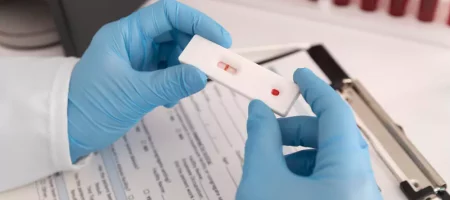
The triple screening test is a simple blood test. Blood is drawn from the mother’s vein and analyzed in a laboratory. Levels of AFP, hCG, and Estriol hormones are measured. The results, along with the mother’s age, gestational week, weight, and other relevant data, are entered into a computer program. The risk of the baby having Down syndrome, Edwards syndrome, or a neural tube defect is then calculated. The procedure is risk-free for the mother, painless, and quick, and does not harm the baby, as it is based solely on maternal blood samples.
What Conditions Does the Triple Screening Test Detect?
The triple screening test does not definitively determine if the baby has a condition, but it identifies the risk for certain disorders. The most common is Down syndrome (Trisomy 21). The test also calculates the risk for serious chromosomal disorders like Edwards syndrome (Trisomy 18). Additionally, it can indicate the risk of neural tube defects, which can affect the development of the baby’s brain and spinal cord. If results show high risk, amniocentesis or advanced genetic tests may be recommended. Therefore, the triple screening test is an important screening method for both maternal and fetal health during pregnancy.
How Are Triple Screening Test Results Interpreted?
Results of the triple screening test are reported as risk ratios indicating the likelihood of the baby having certain genetic conditions. Results are categorized as “low risk” or “high risk.” For example, a ratio of 1/1000 for Down syndrome indicates low risk, while a ratio of 1/50 indicates higher risk. It is important to remember that the triple screening test does not provide a definitive diagnosis. High-risk results are usually followed by amniocentesis or advanced genetic tests for confirmation.
Who Should Have the Triple Screening Test?
The triple screening test is generally recommended as a routine test for all pregnant women. However, it is particularly important for women over 35, those with a family history of genetic disorders, those who previously had a child with genetic anomalies, and women who had high-risk results on a first-trimester double test. If abnormal findings are detected in early ultrasounds, the doctor will usually recommend the triple screening test. Thus, the test can be applied both to at-risk pregnancies and as a routine screening for all expectant mothers.
Is the Triple Screening Test Reliable?
The triple screening test is a reliable and widely used method to evaluate fetal health. However, it does not provide a definitive diagnosis. It can detect approximately 60-70% of Down syndrome cases, around 60% of Edwards syndrome cases, and some neural tube defects. The purpose of the screening is to identify high-risk pregnancies and guide further testing when necessary. Accurate results depend on performing the test at the correct gestational week and in a proper manner, making experienced centers highly important.
What Happens if the Triple Screening Test Shows High Risk?
A high-risk result on the triple screening test does not mean the baby definitely has a disorder. It only indicates an increased risk. In such cases, the doctor may recommend amniocentesis, cordocentesis, or advanced genetic testing to directly examine the baby’s chromosomes for a definitive diagnosis. Detailed ultrasound may also be used to investigate additional findings. Therefore, a high-risk result should not cause panic but should be followed up with further tests.
Differences Between Triple and Quad Screening Tests
The main difference between the triple and quad screening tests is the number of substances measured. The triple test measures AFP, hCG, and Estriol levels in the mother’s blood. The quad test also includes the Inhibin-A hormone, which increases its ability to detect Down syndrome and some other chromosomal disorders. Both tests are generally performed between the 16th and 18th weeks of pregnancy. The quad test has slightly higher sensitivity than the triple test, which is why some centers prefer it. However, neither test provides a definitive diagnosis; they only assess risk. High-risk cases are followed by amniocentesis or advanced genetic testing.
Where is the Triple Screening Test Performed?
The triple screening test can be performed in obstetrics and gynecology clinics, public and private hospitals, and authorized laboratories. Blood is drawn from the mother and analyzed in specialized laboratories. Risk assessment is calculated using a computer program. No special preparation is required, but timing is very important. Results are usually available within a few days and are interpreted by an obstetrician. Therefore, it is recommended to choose reliable and experienced centers.
Triple Screening Test Prices 2026
In centers with advanced technology, prices may be higher. On average, costs range from 2,000 TL to 5,000 TL. For accurate information, it is important for expectant mothers to check current prices with the hospital or laboratory before the test.
Which Week is the Triple Screening Test Performed?
The triple screening test is generally performed between the 16th and 18th weeks of pregnancy. The ideal time for the most accurate results is the 16th week. While it can be done up to the 20th week, reliability decreases afterward. Therefore, expectant mothers should not miss the optimal week. The obstetrician determines the exact timing based on the mother’s health and pregnancy progression. When considered together with the first-trimester double test, the triple test provides a more comprehensive assessment of the baby’s health.
Should the Triple Screening Test Be Done Fasting or Fed?
It does not matter whether the mother is fasting or fed, as the test is based solely on a blood sample. No special preparation is required. Mothers can maintain their normal diet. Some centers may advise avoiding very fatty or heavy meals before the test, mainly for comfort. Thus, fasting is not necessary, and the test can be performed regardless of meal intake.
When Are Triple Screening Test Results Ready?
Results are usually available within a few days. The blood sample is analyzed in the laboratory, and AFP, hCG, and Estriol values are entered into a computer program. The mother’s age, weight, and gestational week are also considered to calculate the risk. In private laboratories, results are often ready in 1-2 days, while in public hospitals, it may take up to a week depending on workload. The obstetrician will review the report and explain the findings to the mother.
If the Triple Screening Test is High Risk, Does It Mean a Definite Anomaly?
A high-risk result does not indicate a definite anomaly in the baby. It only reflects an increased risk for Down syndrome, Edwards syndrome, or neural tube defects. Definitive diagnosis requires amniocentesis, cordocentesis, or advanced genetic testing. Therefore, expectant mothers should not consider the triple screening result as a conclusive diagnosis.
Is the Triple Screening Test Available in Public Hospitals?
Yes, the triple screening test is available in public hospitals. Expectant mothers covered by Social Security (SGK) can have the test done free of charge. In public hospitals, the procedure may take longer due to laboratory workload. In private hospitals, the test is paid but results are usually faster. Regardless of the institution, the reliability of the test remains the same, as standardized methods are used.