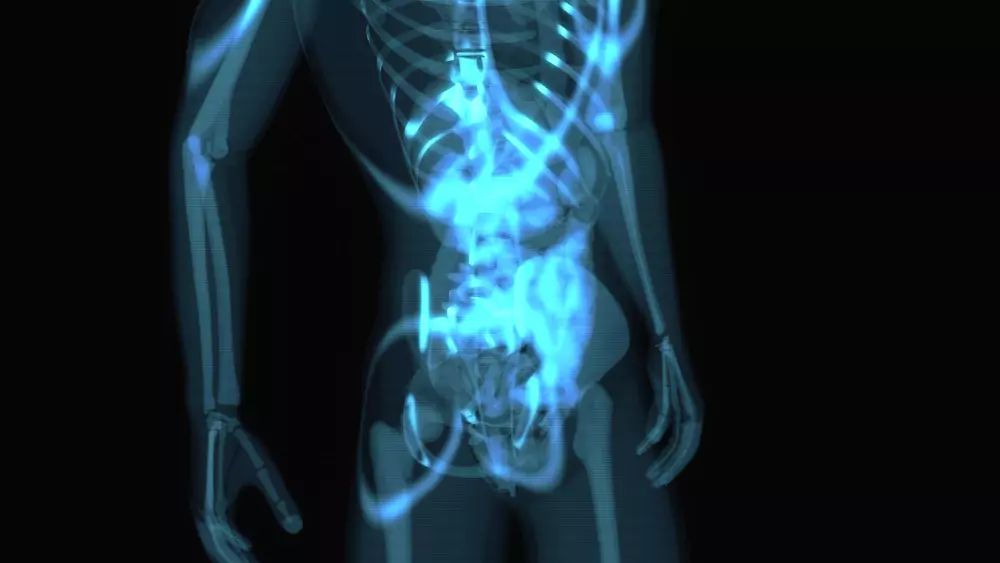
What is Full Spinal MRI?
Full spinal MRI is the examination of all regions along the spine using magnetic resonance imaging. The cervical (neck), thoracic (upper back), lumbar (lower back), and sacral (tailbone) regions are visualized in detail with a single scan. This method allows high-resolution evaluation of the spinal bones, spinal cord, nerve roots, and surrounding soft tissues. Full spinal MRI is particularly important for diagnosing conditions such as lumbar herniated disc, cervical herniated disc, spinal tumors, spinal stenosis, and nerve compressions. It is a safe and comprehensive imaging method because it does not involve radiation and provides detailed images.
Why is Full Spinal MRI Performed?
Full spinal MRI is requested when there are various complaints related to the spine. Persistent neck, back, or lower back pain is investigated. Numbness, tingling, or weakness in the arms and legs may indicate nerve compression, warranting an MRI. If there is suspicion of a mass, tumor, or inflammation in the spinal cord, a full spinal MRI provides a detailed examination. It is also preferred to assess fractures or damage after trauma and is an important imaging method for monitoring neurological conditions such as multiple sclerosis (MS).
What Does Spinal MRI Mean?
Spinal MRI refers to the examination of the spine and spinal cord structure using magnetic resonance imaging. The term “spinal” refers to the spine and spinal cord system, while “MRI” indicates magnetic resonance imaging. This method provides clear visualization of soft tissues in addition to bone structures. Many details that cannot be seen with X-ray or CT are revealed with spinal MRI. For this reason, it is frequently used in orthopedics, neurology, and neurosurgery.
How is Full Spinal MRI Performed?
During full spinal MRI, the patient lies on their back and is positioned inside the MRI machine without movement. Strong magnetic fields are used to obtain detailed images. The procedure is painless. It usually takes 30–60 minutes, and sometimes a contrast agent is administered via intravenous injection for more detailed imaging. The patient must remain completely still, as even minor movement can blur the images. After the scan, the patient can return to daily activities without difficulty.
Which Areas are Examined with Full Spinal MRI?
Full spinal MRI is a detailed examination that covers all parts of the spine. The cervical, thoracic, lumbar, and sacral regions are imaged in a single scan. This examination allows detailed evaluation of the spinal cord, vertebrae, nerve roots, and surrounding connective tissues. It also identifies herniation, degeneration, or slippage in the discs. Spinal tumors, inflammations, cysts, or vascular anomalies can also be detected. Examining the entire spine in one procedure provides a significant advantage in determining the source of the condition.
What Happens During Full Spinal MRI?
During full spinal MRI, the patient is placed on a special table and positioned inside the machine. Cross-sectional images are obtained using strong magnetic fields. Loud noises may be heard, so earplugs or headphones are provided. The patient must remain completely still, as even slight movement can affect image quality. In some cases, a contrast agent is administered via an intravenous line for more detailed imaging. The procedure is painless, though the patient must lie still in a confined space.
How Long Does Full Spinal MRI Take?
Full spinal MRI usually takes 30–60 minutes. The duration may vary depending on the region’s complexity, use of contrast, and the patient’s ability to remain still. Since all spine regions are examined, it takes longer than a standard regional MRI. Because images must be captured carefully, the procedure may extend slightly. The patient remains still and experiences no pain during the scan.
Is Full Spinal MRI Painful?
Full spinal MRI is completely painless. The device operates using sound waves and magnetic fields, causing no physical harm. No injections are required, except in cases where contrast is needed, which is administered via a small IV and is usually painless. Lying still for a prolonged period may cause discomfort for some patients, but the procedure is generally not painful. Patients can resume daily activities immediately after the scan.
Who Cannot Have Full Spinal MRI?
Full spinal MRI is a safe imaging method, but it may not be suitable for some individuals. People with pacemakers, brain stimulators, cochlear implants, metal prostheses, or medical devices that interact with magnetic fields cannot undergo MRI, as the strong magnetic field can disrupt device function. Patients with claustrophobia may also find the procedure challenging; sedatives or open MRI machines may be used. MRI is generally avoided during the first trimester of pregnancy unless absolutely necessary. Patients with a history of metallic foreign objects (e.g., metal fragments in the eye) must inform their doctor before the scan.
Full Spinal MRI in Lumbar and Cervical Herniated Discs
Lumbar and cervical herniated discs are common conditions caused by compression of nerve roots. Full spinal MRI shows the location of the herniation and its effect on the nerves in detail. The disc structure, spinal cord compression, and condition of the nerve roots are clearly evaluated. Other spine conditions such as spinal stenosis, slippage, cysts, or tumors can also be identified. For patients with lumbar or cervical herniation, full spinal MRI is crucial for determining the need for surgery and planning treatment.
Full Spinal MRI Prices 2026
In 2026, the average cost of a full spine MRI in private imaging centers in Turkey is approximately 10,000–15,000 TL. Factors such as machine strength, use of contrast, and service details may increase the price.
How Long Does Spinal MRI Take?
Spinal MRI typically takes 20–45 minutes. The duration depends on the extent of the area being imaged, use of contrast, and the patient’s ability to remain still. If only the neck or lower back is scanned, the duration is shorter. For a full spinal MRI, it may take up to 1 hour. The patient must lie on their back without moving, as even slight movement can blur the images. No pain is felt during the scan, although the machine can produce loud noises.
What Conditions Can Be Detected with Thoracic MRI?
Thoracic MRI provides detailed imaging of the spinal cord and vertebral structures in the back. It can clearly show disc herniation, slippage, spinal cord compression, tumors, inflammation, vascular anomalies, and spinal fractures. Lesions caused by neurological diseases such as multiple sclerosis (MS) can also be detected. Post-traumatic damage or infections can be evaluated. Thoracic MRI is frequently used for back pain, numbness, or weakness.
How is Lower Spine MRI Performed?
Lower spine MRI usually covers the lumbar and sacral regions. The patient lies on their back and is positioned inside the MRI machine. Cross-sectional images of the spine, spinal cord, and nerve roots are obtained using strong magnetic fields. Remaining still is essential. The procedure takes approximately 20–30 minutes, and contrast may be used. Lower spine MRI provides critical information for diagnosing lumbar herniation, spinal stenosis, nerve compression, or masses in the sacral region.
How Long Does Spinal Cord MRI Take?
Spinal cord MRI lasts 20–40 minutes, depending on the length of the area being examined. If only part of the spinal cord is imaged, the duration is shorter. Imaging the entire spinal cord may take longer. If contrast is used, preparation and administration time are added. The procedure is painless, and patients can resume daily activities immediately. Spinal cord MRI helps detect conditions ranging from herniated discs to tumors early. Using contrast may slightly increase the cost. Patients should contact the imaging center for the latest pricing.
Who Should Not Have MRI?
MRI is generally safe, but may not be suitable for some individuals. People with pacemakers, brain stimulators, or cochlear implants cannot undergo MRI, as the strong magnetic field may interfere with device function or cause harm. Patients with metal prostheses, plates, or shrapnel are also at risk. Those with claustrophobia may need open MRI or sedatives. MRI is avoided in the first trimester of pregnancy unless medically necessary.
Which MRI is Used for MS?
Brain and spinal MRI are crucial for diagnosing multiple sclerosis (MS). In MS, damage occurs in the myelin, the protective layer around nerves, appearing as plaques on MRI. Contrast-enhanced brain MRI and spinal MRI are used for diagnosis. These scans distinguish new plaques from old lesions and monitor disease progression. MRI is one of the most reliable methods for suspected MS.
What is Spinal CT?
Spinal CT examines the spine using computed tomography. Unlike MRI, CT uses X-rays and is particularly effective for evaluating bone structures. Vertebral fractures, bone loss, tumors, and calcifications can be seen in detail. However, MRI is superior for soft tissue evaluation. Spinal CT is preferred in emergencies for fast results, especially after trauma when fractures are suspected.
What is Cervical Spinal MRI?
Cervical spinal MRI images the neck vertebrae and spinal cord in this region. It is requested for neck pain, numbness or weakness in the arms and shoulders, and dizziness. Cervical MRI provides detailed information about cervical herniation, spinal cord compression, stenosis, cysts, or tumors. MS plaques in the neck region can also be detected. Cervical MRI is widely used in neurology and neurosurgery clinics due to its safety and detailed imaging without radiation.
When is MRI Performed?
MRI is one of the most reliable imaging methods for detailed evaluation of soft tissues, organs, and the nervous system. It is used for suspected abnormalities in the brain, spinal cord, joints, abdomen, or chest. Prolonged headaches, vision problems, neurological symptoms, back and neck pain, suspected herniation, tumor investigation, and vascular disease assessment often require MRI. Musculoskeletal issues, including ligament, cartilage, and meniscus injuries, are also clearly visualized. MRI is used for pre- and post-operative follow-ups to assess organs and tissues.
What is Cervical Spinal MRI?
Cervical spinal MRI examines the vertebrae and spinal cord in the neck using MRI. The cervical region is the uppermost part of the spine and a critical passageway connecting the brain and body. Cervical MRI is important for diagnosing cervical herniation, spinal cord
compression, nerve entrapment, tumors, and inflammatory diseases. MS plaques in the cervical spinal cord can also be detected. Cervical MRI is safe, detailed, and radiation-free.
How Many Days Until MRI Results are Ready?
MRI results are usually available on the same day or the next day. After the scan, a radiologist evaluates the images and prepares a report. This process typically takes a few hours but may take a day depending on workload. In emergencies, preliminary results may be provided quickly. Private hospitals often provide faster reports, while public hospitals may take longer due to high demand. MRI results are generally available quickly, allowing timely diagnosis and treatment.
How is Herniation Diagnosed on MRI?
Discs between vertebrae are clearly visible on MRI images. Herniation occurs when discs protrude outward, compressing nerves. The MRI report specifies disc protrusion, nerve root compression, or spinal canal narrowing. The size, level, and effect on nerves are also reported. This allows early detection of herniation and planning of treatment. MRI is one of the most reliable methods for diagnosing herniated discs.