What is the Quadruple Screening Test?
One of the most important screening tests during pregnancy is the quadruple screening test. This test is performed by measuring four different biochemical values in the mother’s blood. The aim is to assess the risk of chromosomal abnormalities such as Down syndrome and Edwards syndrome, as well as developmental issues like neural tube defects in the baby. The quadruple screening test does not provide a definitive diagnosis but gives a strong indication of potential risks. We ensure that this test is performed at the right time, offering expectant mothers a safer and more informed roadmap during their pregnancy.
When is the Quadruple Screening Test Performed?
This test is performed between the 16th and 20th weeks of pregnancy. The optimal period is between the 16th and 18th weeks. Performing the test earlier or later may yield misleading results. Timely testing increases the accuracy of the data obtained. During this period, the hormone levels in the mother’s blood are at the most suitable levels, allowing for a healthy risk assessment. We guide expectant mothers at the correct week, ensuring the test provides reliable results.
How is the Quadruple Screening Test Performed?
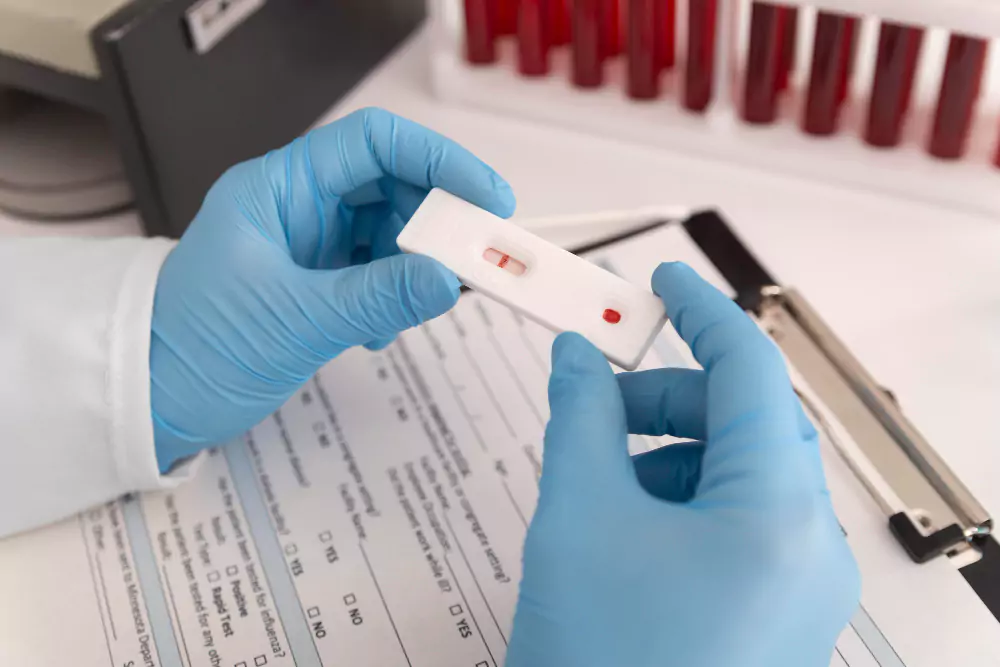
The procedure is quite simple. A blood sample is taken from the expectant mother, regardless of whether she is fasting or not. This sample is analyzed in a laboratory using specialized methods. Four different biochemical markers (AFP, hCG, estriol, and inhibin-A) are measured in the test. The obtained values are evaluated together with personal information such as the mother’s age, weight, and gestational week. This allows for the calculation of potential risks for chromosomal anomalies in the baby. We make the test process easy and provide detailed information to expectant mothers both before and after the procedure.
What Does the Quadruple Screening Test Indicate?
This test reveals important risk factors regarding the baby’s health. It provides information about the likelihood of developmental disorders such as Down syndrome (Trisomy 21), Edwards syndrome (Trisomy 18), and neural tube defects. If the test shows a high risk, further diagnostic procedures such as amniocentesis or advanced genetic tests may be recommended. This helps detect potential issues at an earlier stage of pregnancy and allows the family to be informed. We use the valuable data provided by the quadruple screening test to ensure a safe pregnancy process for both parents.
How Are the Quadruple Screening Test Results Interpreted?
The blood sample taken from the mother is analyzed in the laboratory, and the levels of four different hormones and proteins are evaluated according to the gestational week. These values are combined with personal information such as maternal age, weight, and gestational age using computer programs, producing probability ratios. If the results exceed a certain risk threshold, the likelihood of chromosomal abnormalities in the baby is considered high. However, it is important to remember that this test does not provide a definitive diagnosis. In high-risk cases, further diagnostic tests (such as amniocentesis or CVS) may be required. We ensure that results are communicated clearly to families and guide them on the necessary next steps.
Is the Quadruple Screening Test Reliable?
This test is considered quite reliable among pregnancy screening tests. When performed at the correct gestational week, it can detect chromosomal disorders such as Down syndrome with approximately 80% accuracy. However, it is not a definitive diagnostic test and only determines risk. A “high-risk” result does not necessarily mean the baby is affected, just as a “low-risk” result does not guarantee the baby is completely healthy. Nonetheless, it is an important step in pregnancy monitoring. We perform this test with correct timing to provide expectant mothers with reliable and valuable information.
Who is Recommended to Take the Quadruple Screening Test?
This screening test is generally recommended for all expectant mothers. It is particularly important for women over 35, those with a family history of genetic diseases, those who have had a previous high-risk pregnancy, and those who have not undergone the triple screening test. Additionally, doctors recommend this test when suspicious findings are observed on ultrasound. We ensure that expectant mothers in risk groups undergo this test at the right time, helping detect potential problems early.
What Should Be Done if the Quadruple Screening Test Shows High Risk?
If the quadruple screening test during pregnancy indicates a high risk, it may cause concern for expectant parents. However, it is important to remember that this test does not provide a definitive diagnosis and only determines the likelihood of chromosomal abnormalities. When high risk is detected, the first step is a detailed evaluation of the results by an obstetrician. Advanced diagnostic methods such as amniocentesis, chorionic villus sampling (CVS), or next-generation genetic tests may then be recommended. These tests provide a definitive diagnosis. We support families during such situations, provide continuous information, and ensure the safest steps are taken.
Differences Between the Quadruple and the Double Screening Test
Both tests are applied to determine the risk of potential chromosomal abnormalities during pregnancy. The double screening test is performed between the 11th and 14th weeks and measures PAPP-A and free β-hCG hormones in the mother’s blood. The quadruple screening test is performed between the 16th and 20th weeks and measures four parameters (AFP, hCG, estriol, inhibin-A). The double test is applied earlier, while the quadruple test is done later and provides a more detailed risk assessment due to the additional parameters. We plan both tests according to the course of pregnancy, providing expectant mothers with the most accurate information.
Where is the Quadruple Screening Test Performed?
This test can be performed in private health centers with fully equipped laboratories, state hospitals, and university hospitals. With the guidance of an obstetrician, a blood sample is taken from the expectant mother at the appropriate gestational week and sent to the laboratory. Results are usually obtained within a few days and evaluated by a specialist physician. We work with reliable laboratories to ensure that expectant mothers receive the most accurate and dependable results.
Quadruple Screening Test Prices 2026
Prices vary depending on the health center, the technology of the devices used, and the laboratory facilities. Costs may differ in private hospitals, while state hospitals may offer lower costs. When fast results are requested or the test kit quality is high, the price may range from 2,500 to 10,000 TL or slightly above.
As of 2026, expectant mothers who want up-to-date prices can contact us for a quote. Our transparent pricing policy provides clear information to families and offers reliable and budget-friendly solutions.
Is the Quadruple Screening Test Done on an Empty Stomach?
One common question from expectant mothers is whether this test is performed on an empty stomach. Fasting is not required for the quadruple screening test; it can be done at any time of the day. The test is performed only with a blood sample from the mother, so there is no need for prolonged fasting. This allows expectant mothers to undergo the test without disrupting their daily routine. We provide necessary information so that mothers feel comfortable and ensure the procedure goes smoothly.
Does the Quadruple Screening Test Provide a Definitive Result?
The purpose of this test is to determine the risk for chromosomal anomalies and some congenital disorders in the baby. However, it is not a definitive diagnostic test. A “high-risk” result does not necessarily mean the baby is affected, and a “low-risk” result does not guarantee complete health. The quadruple test is a screening tool that guides pregnancy follow-up. For a definitive diagnosis, advanced methods such as amniocentesis or genetic tests are required. We assist expectant mothers in correctly interpreting test results and provide necessary guidance.
During Which Week is the Quadruple Screening Test Performed?
The most accurate time for this test is between the 16th and 20th weeks of pregnancy. It is particularly recommended between the 16th and 18th weeks because hormone levels are most suitable for measurement during this period. Tests performed earlier or later may be less reliable. Performing the test at the correct time increases the accuracy of the risk assessment. We guide expectant mothers at the most appropriate gestational week to ensure the most reliable results.
What Does a High Quadruple Test Result Mean?
A high-risk result indicates an increased likelihood of developmental issues such as Down syndrome, Edwards syndrome, or neural tube defects in the baby. This does not constitute a definitive diagnosis but only signals the risk level. When the result is high, doctors usually recommend advanced diagnostic tests. Amniocentesis, CVS, or next-generation genetic tests clarify the risk. We support families in such cases, provide accurate information, reduce anxiety, and ensure the process progresses safely.
Is the Quadruple Screening Test Available in State Hospitals?
This test is not only performed in private hospitals but also in state hospitals and university hospitals. Blood samples from expectant mothers are analyzed in laboratories approved by the Ministry of Health to complete the test. In state hospitals, the test is usually offered at a lower cost and may even be free in some cases. We guide expectant mothers to the right centers and assist in ensuring the test is performed reliably.