What is a Panoramic X-ray?
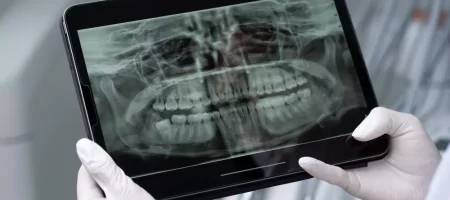
A panoramic X-ray is a special imaging method frequently used in dentistry that shows the entire oral structure on a single film. With this X-ray, both the upper and lower jaw, all teeth, jaw joints, and jawbones can be examined in detail. While standard dental X-rays can only display a few teeth, a panoramic X-ray allows the entire oral structure to be seen as a whole. The condition of the jawbones, impacted teeth, the presence of cysts or tumors, and the alignment of the teeth can be easily detected with this method. It is an indispensable tool in diagnosis and treatment planning in dentistry.
What is a Panoramic X-ray Used For?
A panoramic X-ray is taken for multiple purposes to evaluate dental and jaw health. Detecting tooth decay, locating impacted or unerupted teeth, and assessing cyst or tumor formation in the jawbone are among the most common reasons. It is also required before tooth extractions, implant planning, orthodontic treatment, and denture preparation. In cases of suspected jawbone fractures or damage after trauma, this method is also preferred. Thus, before starting treatment, the dentist gains detailed information about the patient’s entire oral structure.
How is a Panoramic X-ray Taken?
The procedure for taking a panoramic X-ray is quite practical and completed in a short time. The patient stands upright in front of the device and places their jaw on a special apparatus. During the procedure, the device makes a circular motion around the head, scanning the entire oral structure. The patient must remain still during the scan; otherwise, the image may not be clear. Since the X-ray uses a low dose of radiation, the patient feels no pain or discomfort. The process is completed in just a few seconds, and the resulting image is transferred to a computer screen.
What Dental Problems Can a Panoramic X-ray Show?
A panoramic X-ray reveals many issues related to dental and jaw health. Tooth decay, gum disease, impacted teeth, and misaligned teeth can be clearly seen on this film. Additionally, cysts, tumors, infections, or bone loss in the jawbone can also be detected with a panoramic X-ray. In orthodontic cases, it is useful for evaluating misalignments, jaw joint problems, and denture planning. This allows the most appropriate treatment plan for the patient’s oral health.
Is a Panoramic X-ray Harmful?
A panoramic X-ray is taken using a low dose of X-rays. Compared to the amount of natural radiation a person is exposed to in daily life, the dose from a panoramic X-ray is quite low. Therefore, it does not pose a serious risk for healthy individuals. However, since unnecessary radiation exposure should be avoided in pregnant women, they must inform their doctor before the procedure. Modern devices have further reduced radiation doses, and protective measures are taken during the procedure. Therefore, panoramic X-rays are considered a safe imaging method in medicine.
How Long Does a Panoramic X-ray Take?
A panoramic X-ray is completed in a very short time. Positioning the patient in front of the device and placing the jaw takes a few minutes. The imaging process itself takes about 10–20 seconds. Since the entire oral structure is scanned in one go, the procedure is quick and practical. After the scan, the images are immediately transferred to the computer screen and can be reviewed by the dentist. For this reason, panoramic X-rays save time for both the patient and the dentist.
What Should Be Considered Before a Panoramic X-ray?
Patients should pay attention to a few small preparations before a panoramic X-ray. Metal fillings or fixed dentures in the mouth do not affect image quality, but removable dentures and metal items (earrings, necklaces, hairpins) should be removed. The patient must remain still during the scan and place their jaw correctly. Women who may be pregnant must inform the doctor. Being hungry or full does not affect the result, so no special preparation is needed.
Differences Between Panoramic X-ray and Periapical X-ray
Panoramic and periapical X-rays are two different imaging methods used for different purposes. A panoramic X-ray shows the entire jaw and all teeth on a single film, while a periapical X-ray provides a detailed view of just one or a few teeth. Panoramic X-rays are mainly preferred for general assessment, implant planning, orthodontic treatment, and jawbone evaluation. Periapical X-rays, on the other hand, are used to examine the tooth root, nerve, and surrounding tissues in detail. In short, panoramic X-rays provide broad information, while periapical X-rays are advantageous for detecting localized problems.
Where is a Panoramic X-ray Taken?
A panoramic X-ray is one of the most commonly used imaging methods in dentistry and can be taken at many healthcare facilities. Panoramic X-ray services are available in the dental clinics of state hospitals, university hospitals, and private dental clinics. They can also be taken at private radiology centers that provide imaging services only. Specially designed panoramic X-ray machines are used, and the procedure is usually performed in dental or radiology departments. Since a general assessment of the oral structure is often required before treatment, patients usually have a panoramic X-ray upon the dentist’s referral.
Panoramic X-ray Prices 2026
Panoramic X-ray prices may vary depending on the facility where the procedure is performed, the technology of the device used, and whether the clinic is private or public. In state hospitals, panoramic X-rays taken under the Social Security Institution are usually free of charge. For a standard procedure, it is reasonable to expect costs of around 2,000–7,000 TL.
In private hospitals and dental clinics, however, prices in 2026 may vary depending on service quality and the clinic’s pricing policy. Some private clinics include panoramic X-rays in the examination fee, while others may charge separately. To get the exact cost, it is best to directly inquire at the facility where the procedure will be performed.
Can a Panoramic X-ray Be Taken During Pregnancy?
During pregnancy, unnecessary radiation exposure should be avoided. Since a panoramic X-ray involves low-dose X-rays, it is generally not performed in pregnant women unless absolutely necessary. If it must be taken, extra precautions such as covering the abdomen with a protective lead apron are applied. Avoiding radiation is especially important during the first trimester. Therefore, pregnant patients who may need a panoramic X-ray must inform their doctor.
How Long Does it Take to Get Panoramic X-ray Results?
Panoramic X-ray results are available immediately after the scan. The procedure itself is completed within a few seconds, and the image is instantly transferred to the computer. The dentist or radiologist can examine the film right away. In some cases, if a detailed report is required, the process may take a few hours. However, in general, panoramic X-ray results are ready on the same day, allowing the patient to quickly receive an evaluation.
Does a Panoramic X-ray Clearly Show the Jaw Structure?
A panoramic X-ray is one of the most effective imaging methods for evaluating the general appearance of the jaw structure in a single frame. All teeth in the upper and lower jaws, jawbones, joint areas, and bone density can be viewed in detail through panoramic X-rays. Impacted teeth, the presence of cysts or tumors in the jawbone, infections, and bone loss can be easily identified with this film. However, panoramic X-rays are mainly used for general assessment; for very small details, additional methods such as periapical X-rays or tomography may be required. Still, since they provide quick and comprehensive information about the overall health and symmetry of the jaw, panoramic X-rays are indispensable in dentistry.
Are Panoramic X-rays Available in State Hospitals?
State hospitals provide panoramic X-ray services in dental clinics and radiology departments. Procedures performed under the Social Security Institution are usually free of charge or carried out at very low costs. Panoramic X-rays are frequently taken in state hospitals, especially to evaluate the general oral and jaw structure before dental treatment. In some major cities, training and research hospitals are equipped with more modern devices that deliver faster results. Patients can easily undergo this imaging at state hospitals by obtaining a referral from the relevant clinic.
Are Panoramic X-rays Safe for Children?
Since panoramic X-rays use a low dose of X-rays, they can also be safely applied to children. However, to avoid unnecessary radiation exposure, they are only taken when deemed necessary by the doctor. Panoramic X-rays are preferred for monitoring dental development, viewing the placement of milk and permanent teeth, identifying impacted teeth, and planning orthodontic treatments. A protective apron is used during the scan to minimize radiation exposure. Therefore, when performed under specialist supervision, panoramic X-rays are considered safe for children.