What is Mammography?
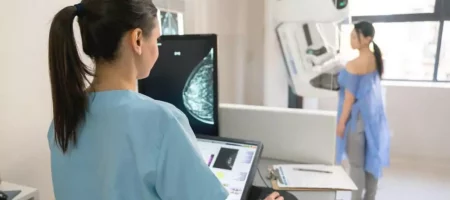
Mammography, one of the most commonly used screening methods in medicine, allows for detailed examination of breast tissue. This method works with low-dose X-rays, enabling even the smallest structural changes in the breast to be visualized. It is critically important for the early detection of breast cancer, as the disease can be detected by mammography even when it is too small to be felt manually. The equipment used is specially designed to show breast tissue in detail and highlight suspicious areas. Therefore, mammography is considered one of the most powerful tools for early diagnosis in women’s health.
What is Mammography Used For?
Mammography serves as a screening and diagnostic tool for breast health, playing a key role in the early detection of breast cancer. Besides cancer, it is also used to differentiate benign conditions such as cysts, fibroadenomas, or calcifications. For complaints like breast pain, discharge, or a palpable lump, mammography is usually one of the first tests a doctor will order. When performed regularly, it can detect early-stage changes even without any symptoms. Early diagnosis of detected conditions leads to higher treatment success and helps maintain quality of life.
How is Mammography Performed?
During the examination, the patient stands in front of the machine and the breast is placed between two special plates. The tissue is pressed between these plates for a few seconds to keep it steady. This compression ensures clear images and high-quality results using a low dose of radiation. A brief pressure may be felt during the procedure, but it is not painful. Each breast is usually imaged from two different angles. The entire procedure takes approximately 10–15 minutes. Before the examination, the skin should be free of creams, perfume, or deodorant, as these substances can affect image quality.
When Should Mammography Be Done?
Regular check-ups are crucial for breast health. Generally, women are advised to undergo mammography at regular intervals after age 40. Women with a family history of breast cancer or those in high-risk groups may start screening at an earlier age. The best time for the examination is the first week after menstruation because the breast tissue is softer and less sensitive during this period. Screening is usually planned every 1–2 years, but doctors may recommend shorter intervals based on individual risk factors. Regular mammography is life-saving through early detection.
Does Mammography Hurt?
During mammography, the breasts are placed between special plates and slightly compressed. The purpose of this compression is to stabilize the tissue and achieve clearer images. Some women may feel brief pressure, especially if their breast tissue is sensitive, but this usually lasts only a few seconds and is tolerable. With modern devices, pressure is applied more evenly, increasing comfort. Most women can continue their daily activities without pain or discomfort after the procedure.
How Are Mammography Results Interpreted?
After the examination, the images are reviewed by a radiology specialist. Results are typically reported using the internationally recognized BI-RADS classification system. This system indicates whether the images are normal or contain suspicious findings. For example, BI-RADS 1 indicates completely normal results, while BI-RADS 2 indicates benign changes. Higher categories may indicate suspicious or malignant (cancerous) findings. Interpretation of results should be done not only by the radiologist but also by the physician following the patient, considering personal risk factors, family history, and clinical findings.
What is the Difference Between Mammography and Ultrasound?
Both methods are used to evaluate breast health but have different characteristics. Mammography is an imaging technique using low-dose X-rays and is particularly successful in showing calcifications and small tumors. Ultrasound uses sound waves and contains no radiation. It can provide more detailed results in young women whose breast tissue is dense. Mammography is primarily a screening method, while ultrasound is more of a supportive diagnostic tool. When suspicious findings are detected, combining both methods increases diagnostic reliability.
At What Ages is Mammography Needed?
For the early detection of breast cancer, the appropriate ages for mammography are important. Generally, women are advised to start regular mammography screenings at age 40. Women with a family history of breast cancer, genetic predisposition, or high-risk groups may begin screening at age 35. Screening is usually scheduled every 1–2 years, but doctors may recommend more frequent checks based on risk factors. Regular mammography is life-saving for detecting breast cancer at an early stage.
What Should Be Considered Before Mammography?
Paying attention to certain points before the examination increases comfort and ensures clearer images. The most important detail is to avoid applying perfume, deodorant, cream, or powder on the skin, as these can create shadows in the images. The best time for the test is the first week after menstruation, when breast tissue is softer and discomfort from compression is minimized. Avoid wearing jewelry, metal accessories, or tight clothing. Women who may be pregnant should inform their doctor. Bringing previous mammography or breast ultrasound images can be helpful for comparative analysis.
Where is Mammography Performed?
Mammography can be performed in public hospitals, university hospitals, and private healthcare centers. In most major cities, it is easy to access centers with mammography equipment. Early diagnosis centers and some private imaging clinics also offer mammography services. In public hospitals, it can often be done at low cost or free under Social Security Institution (SGK) coverage. In private healthcare facilities, services are faster and results are usually delivered the same day. Regardless of location, the technology of the device and evaluation by expert radiologists are important for reliable results.
Mammography Prices 2026
As of 2026, mammography prices vary depending on the healthcare facility, device technology, and service scope. In public hospitals under SGK coverage, costs are low. Private hospitals and imaging centers may have higher fees. Advanced mammography methods, such as dense breast tissue evaluation or tomosynthesis, may cost between 4,500 – 10,000 TL or slightly higher. Some private health insurance plans cover mammography, offering additional convenience. Considering the benefits for breast health, the prices are generally kept accessible.
Is Mammography Done on an Empty Stomach?
No fasting is required for mammography. The examination can be performed without altering the daily diet. Since the device only images breast tissue, there are no issues related to the stomach or intestines. Patients only need to avoid creams, powders, perfumes, or deodorants applied to the skin before the procedure, as these can affect image quality. Therefore, there is no need to fast; the patient can continue normal eating habits.
Does Mammography Contain Radiation?
Mammography uses low-dose X-rays. Therefore, it does involve radiation, but the dose is very low and does not pose a serious health risk. Compared to natural radiation exposure in daily life, the dose during mammography is minimal. Modern devices have further reduced this exposure. For this reason, mammography is considered safe and can be performed regularly without concern.
How Often Should Mammography Be Performed?
Regular screening programs are crucial for the early detection of breast cancer. Generally, women are advised to have mammography every 1–2 years from age 40. High-risk women, those with a family history of breast cancer, or those with a genetic predisposition may start screening earlier and more frequently. The doctor determines the frequency based on individual risk factors. Regular mammography ensures early detection and increases treatment success.
Is Mammography Harmful?
Although mammography involves low-dose radiation, it is considered a safe method. It is recommended by the World Health Organization and other health authorities for screening and diagnosis. A brief pressure sensation may occur during the procedure, but it does not cause permanent harm. The radiation dose is very low, so it carries no long-term risk. Mammography is not recommended during pregnancy because even low-dose radiation could affect the baby. Otherwise, regular mammography plays a life-saving role in early disease detection rather than harming health.
Is Mammography Free in Public Hospitals?
Mammography performed in public hospitals under SGK coverage is usually free. Screening programs especially cover women over age 40. Additionally, patients with complaints referred by a doctor can also have the test covered by SGK. Appointments can be scheduled easily at public hospitals. In private healthcare facilities, the test is paid, but in SGK-affiliated centers, it can be free or very low cost.
What Does a Breast Biopsy Report Show?
During a breast biopsy, samples are examined in a pathology laboratory, and a report is prepared. This report indicates the structure of the tissue and whether the cells are normal or abnormal. If benign findings are present, terms like fibroadenoma, cyst, or fibrocystic changes may appear. If malignant cells are found, the report details the type of breast cancer, spread characteristics, grade, and hormone receptor status. The report provides critical information for treatment planning, so expert interpretation is essential.
What is Examined in a Breast Biopsy?
The tissue sample taken during a biopsy is examined under a microscope. The pathologist evaluates cell structure, arrangement, growth rate, and whether it has spread to surrounding tissue. Hormone receptors (estrogen, progesterone) and biological markers like HER2 are also tested. These analyses help determine not only the presence of cancer but also its type and response to treatment. Some biopsies reveal only benign changes, while others may detect precancerous lesions. A biopsy is the most definitive diagnostic method to guide disease management and treatment.
How is Cancer Detected in a Biopsy?
Cancer is diagnosed by examining the tissue sample under a microscope. Normal cells have a regular structure, while cancer cells grow irregularly, uncontrollably, and invade surrounding tissues. The pathologist assesses nuclear size, shape variations, and division rates. If abnormalities are pronounced, a cancer diagnosis is confirmed. Immunohistochemistry and other staining techniques may also be used to determine the type and behavior of the cells, providing comprehensive information for treatment.
Does Biopsy Spread Cancer?
Contrary to popular belief, biopsy does not spread cancer. Modern biopsy techniques are considered safe. A thin needle or specialized biopsy device is used to collect tissue, and this does not cause cancer cells to spread. Clinical studies confirm that biopsy does not negatively affect cancer progression. Not performing a biopsy delays accurate diagnosis and treatment. For early detection, biopsy remains the most reliable method.
Does a Biopsy Give a Definitive Result?
Biopsy is one of the most reliable diagnostic methods because it collects tissue directly from the suspicious area for detailed microscopic examination. The pathologist examines cell structure, organization, and behavior to provide a definitive diagnosis. Imaging methods like mammography or ultrasound can indicate suspicious areas, but only a biopsy confirms whether the area is benign or malignant. Thus, biopsy is considered the gold standard for diagnosing breast cancer and other tumors. Additional tests may occasionally be needed, but treatment planning is generally based on biopsy results.
Is Every Breast Lump Malignant?
Not every lump in the breast is malignant. Many women develop benign lumps such as fibroadenomas, cysts, or fibrocystic changes at various times in life. These lumps usually do not turn into cancer and can be monitored with regular follow-up. However, any palpable lump should be taken seriously and evaluated by a doctor, as malignant tumors can also present as lumps. Imaging methods can provide information, but only a biopsy can provide a definitive diagnosis. Therefore, not every lump indicates cancer, but every lump requires professional evaluation.