What is the Double Screening Test?
The double screening test, performed in the early stages of pregnancy, provides important information about the health of the baby in the womb and is used to assess the risk of chromosomal abnormalities such as Down syndrome (Trisomy 21) and Trisomy 18. This test does not provide a diagnosis; it only calculates the probability. The risk rate is determined by evaluating the mother’s age, blood values, and ultrasound findings together.
Conducted in the first trimester, this test serves as a guide to determine whether further examination of the baby is necessary. By performing this test, we help expectant mothers become aware early and detect potential risks.
When is the Double Screening Test Performed?
For the most accurate results, the test should be conducted between the 11th and 14th weeks of pregnancy. This period allows for clear visualization of the baby’s nuchal translucency (NT measurement). Additionally, certain hormones in the mother’s blood can be accurately evaluated during these weeks.
If the specified period is missed, the test cannot be performed and other screening tests may be recommended. Therefore, the timing should be correctly planned during the first prenatal visits. We remind expectant mothers of the correct timing to ensure the test is performed at the most suitable period.
How is the Double Screening Test Performed?
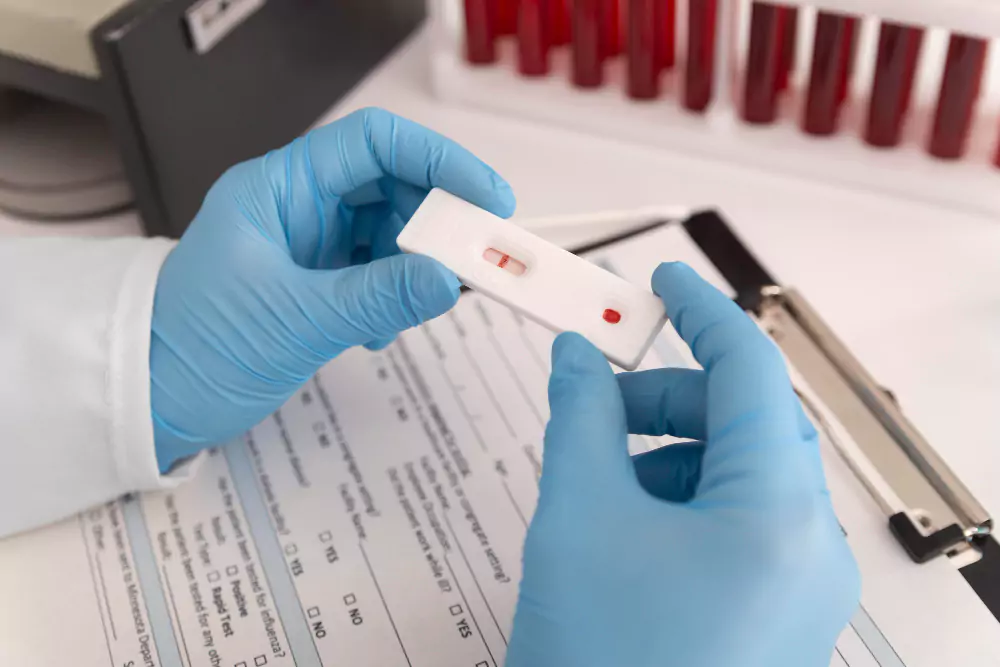
The test consists of two stages. In the first stage, an ultrasound is performed to measure the baby’s nuchal translucency and evaluate the presence of the nasal bone. These measurements can indicate the risk of chromosomal anomalies. In the second stage, a blood sample is taken from the mother. The sample is analyzed for PAPP-A (Pregnancy-Associated Plasma Protein A) and free beta-hCG hormones.
All obtained data are analyzed using computer programs, with the mother’s age included in the calculation, to determine the risk percentage. The test is completely safe for both mother and baby. We use this method to provide results quickly and reduce expectant mothers’ anxiety.
What Does the Double Screening Test Show?
This test does not determine whether the baby is definitely affected, but shows the risk level. It calculates the probability of chromosomal anomalies such as Down syndrome and Edwards syndrome. For example, a high-risk result indicates a higher likelihood that the baby may have these conditions.
Conversely, a low-risk result suggests a higher probability of a healthy baby. However, the result is not a definitive diagnosis. In high-risk cases, further tests (such as amniocentesis or CVS) are recommended. We perform the double screening test to provide families with a clear roadmap and guide them on the next steps.
Is the Double Screening Test Reliable?
Performed in the early months of pregnancy, the double screening test is an important method for assessing the risk of chromosomal abnormalities. While it does not provide a definitive diagnosis, it serves as a guide for pregnancy management. Its reliability is around 85–90%. This means a high-risk result does not necessarily indicate a sick baby, and a low-risk result does not guarantee complete health.
The reliability of the test depends on the quality of the ultrasound, the experience of the specialist performing the measurement, and the accuracy of the laboratory analyses. Therefore, performing the procedure in a reliable center increases the confidence in the results. We conduct these tests using modern equipment, ensuring expectant mothers receive safe and accurate results.
How Are Double Screening Test Results Interpreted?
Results indicate the risk levels for anomalies such as Down syndrome and Edwards syndrome. For example, a result of 1/50 is considered high risk, while a value of 1/1000 is considered low risk. It is important to remember that this represents probability, not a definitive diagnosis.
High-risk results lead to further diagnostic methods, such as amniocentesis or CVS (chorionic villus sampling), to provide a definitive diagnosis. Low-risk results continue with normal follow-up. We evaluate the results and explain them to families clearly and understandably.
Does the Double Screening Test Pose a Risk of Miscarriage?
No invasive procedure is performed on the mother or baby during this test. Only ultrasound imaging and blood sampling are conducted. Therefore, it does not pose a miscarriage risk or harm the mother or baby. The methods used are completely safe.
Expectant mothers may sometimes worry because of the test’s name. However, it should be understood that the double screening test is purely a screening method and does not pose any risk to the pregnancy. We inform mothers about the safety of the process and help alleviate their concerns.
What Happens If the Double Screening Test Shows High Risk?
A high-risk result does not mean the baby is definitively affected. In such cases, the doctor may recommend additional tests. Definitive diagnosis is made through procedures such as amniocentesis, CVS, or advanced ultrasound evaluations. The process is explained in detail to the family, and guidance is provided for decision-making.
After a high-risk result, closer monitoring of the mother is conducted to ensure a safer pregnancy. We support families in such situations, providing guidance to reach the most accurate outcome.
Differences Between Double, Triple, and Quadruple Screening Tests
Screening tests during pregnancy are performed at different stages and provide different types of information. The double screening test is performed between the 11th and 14th weeks of pregnancy, specifically assessing the risk of anomalies such as Down syndrome (Trisomy 21) and Trisomy 18. The baby’s nuchal translucency is measured via ultrasound and analyzed together with maternal blood values.
The triple screening test is performed between the 15th and 20th weeks of pregnancy. This test evaluates maternal blood levels of alpha-fetoprotein (AFP), free beta-hCG, and estriol. It provides information about additional issues such as Down syndrome and neural tube defects.
The quadruple screening test includes the triple test plus the measurement of inhibin-A hormone, offering more reliable risk assessment. Therefore, triple and quadruple tests are considered continuations of the double test. However, no screening test provides a definitive diagnosis; they only assess risk. We perform all these tests at the appropriate weeks to provide accurate information about pregnancy progression.
Where is the Double Screening Test Performed?
This test is performed in hospitals and private clinics with obstetric specialists. Both ultrasound and laboratory facilities must be available. The baby’s nuchal translucency and nasal bone are evaluated in the ultrasound unit, while the blood sample is analyzed in the laboratory. Data are then combined via computer programs to calculate the risk percentage.
The test can be performed in public hospitals, university hospitals, and private centers. Obstetric specialists guide the test at the appropriate weeks. We conduct this procedure with modern equipment, ensuring expectant mothers obtain reliable results.
Double Screening Test Prices 2026
Prices vary depending on the center, the quality of equipment, and the laboratory reporting method. In public hospitals, this test is usually free under social security coverage. The average cost can be considered around 3,000–4,500 TL.
As of 2026, private healthcare institutions may have different price ranges. Some centers charge only the basic test fee, while others include detailed reports and additional evaluations in the cost. We provide transparent information and offer the most suitable options for each patient.
Is the Double Screening Test Done on an Empty Stomach?
The double screening test is performed between the 11th and 14th weeks of pregnancy. Blood is drawn from the mother, and the baby’s nuchal translucency is measured via ultrasound. There is no requirement to be fasting or fed. The mother can attend the test after a normal meal. Since fasting is not mandatory, it is sufficient for the mother to prepare in the way that makes her most comfortable.
Does the Double Screening Test Provide a Definitive Result?
This test calculates the risk for chromosomal abnormalities such as Down syndrome (Trisomy 21) and Trisomy 18. However, it does not provide a definitive diagnosis. Its purpose is to indicate the probability of a genetic problem in the baby. Definitive diagnosis requires advanced tests such as amniocentesis or chorionic villus sampling. Although highly reliable, the double screening test only offers a risk assessment.
When Are Double Screening Test Results Available?
The time for results depends on the laboratory workload of the center. Generally, results are available within 3 to 7 days. Some private centers provide same-day results. In public hospitals, results may take a few days depending on the laboratory process. Once available, the mother should review the report with her obstetric specialist and follow the doctor’s guidance for the next steps.
If the Test Shows High Risk, Is the Baby Definitely Affected?
A high-risk result does not mean the baby is definitely affected. It only indicates an increased likelihood of a genetic issue. In such cases, doctors may recommend advanced tests. Definitive diagnosis is made through amniocentesis or chorionic villus sampling. Therefore, even with a high-risk screening result, it is important to follow the doctor’s guidance calmly.
Is the Double Screening Test Performed in Public Hospitals?
The double screening test is performed in public hospitals as part of routine pregnancy monitoring. Mothers with social security coverage can have the test free of charge. Ultrasound measurements and blood tests are performed together, and results are evaluated in the laboratory. This ensures expectant mothers receive reliable results. In private hospitals, the test is performed for a fee, and in some centers, results are available more quickly.